How Scrolling Through Other People's Wins Is Quietly Shrinking Your Own
The Feed Was Never Neutral
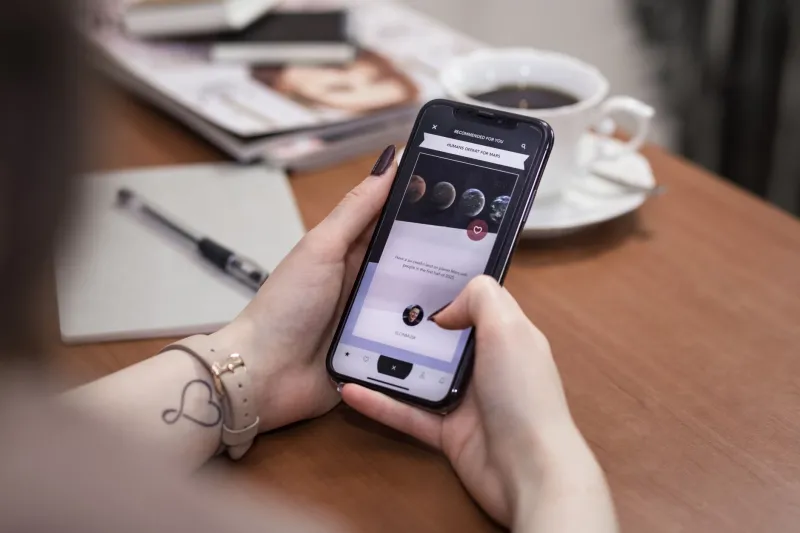
Here's something worth sitting with: the platforms you use to stay connected to your industry are not passive windows into what's happening out there. They're curated highlight reels, engineered to surface the content that generates the most emotional reaction — which, in creative spaces, almost always means the most impressive stuff. The launch that went viral. The commission that landed a major brand. The project that got the press write-up.
None of that is an accident. Algorithms reward engagement, and nothing drives engagement quite like envy dressed up as admiration. So every time you scroll looking for a spark, you're also walking into a carefully arranged gallery of other people's best moments — with zero context for how long it took, how many failed attempts came first, or what they're quietly struggling with right now.
And then you look at your own work.
Suddenly that piece you were genuinely excited about this morning feels a little flat. A little unfinished. A little behind.
That feeling has a name. It's the comparison trap, and it's one of the most reliable creativity killers working against you today.
Why Your Brain Is Wired to Do This (And Why That's Actually Fine)
Here's the thing — comparing yourself to others isn't a character flaw. It's a deeply human cognitive habit called social comparison theory, first identified by psychologist Leon Festinger back in the 1950s. We measure ourselves against the people around us because, historically, that's how we calibrated where we stood, what we needed to improve, and how we fit into a community.
In small, real-world doses, comparison can be genuinely useful. Seeing what a more experienced creator is doing can open your eyes to what's possible. Noticing a peer's growth can push you to stretch. That part of your brain isn't broken — it's just operating in an environment it was never designed for.
The problem is that social media has taken a tool built for occasional, contextual use and turned it into a firehose running 24/7. You're not comparing yourself to the five or six people in your immediate circle anymore. You're stacking your everyday, unglamorous creative reality against the curated peaks of thousands of people, across every platform, all at once.
No one comes out of that feeling particularly good about their own work.
The Specific Way It Messes With Your Output
Comparison doesn't just make you feel bad in the moment. It actually changes what you make — and usually not for the better.
When you're in a comparison spiral, you start unconsciously editing yourself toward whatever seems to be working for other people. You second-guess the thing that makes your work distinctly yours because it doesn't look like what's getting traction. You start chasing aesthetics, formats, or topics that feel adjacent to someone else's success rather than native to your own voice.
This is the sneaky part. It doesn't feel like you're copying anyone. It feels like you're improving. Leveling up. Getting more professional. But what's actually happening is that you're sanding down the specific edges that make your work worth paying attention to in the first place.
The creative confidence you're trying to build by studying what works out there? You're accidentally dismantling it every time you let someone else's highlight reel become your benchmark.
Consuming Other People's Work Without Letting It Consume You
The answer here isn't to log off forever and create in a hermetically sealed bunker. Staying connected to your field matters. Seeing what other people are building can genuinely inspire you when you approach it the right way. The goal isn't isolation — it's intentionality.
A few things that actually help:
Separate browsing from working. This is a simple boundary that makes a surprisingly big difference. Don't open social media when you're in the middle of making something. The comparison hit lands hardest when you're already mid-project and feeling uncertain. Keep those two activities in different parts of your day, and the emotional bleed-through shrinks significantly.
Get curious instead of evaluative. When you look at someone else's work, train yourself to ask how did they do that? instead of why don't I do that? One question makes you a student. The other makes you a critic of your own work before it's even finished. Curiosity is generative. Evaluation, at the wrong moment, is just a drain.
Audit your feed like it's a budget. You wouldn't keep subscriptions that consistently make you feel worse. Apply the same logic to who you follow. If a specific account reliably leaves you feeling deflated rather than energized, that's data. Unfollow without guilt. This isn't about avoiding people who are more successful than you — it's about recognizing which comparisons are actually useful to you and which ones are just noise.
Create before you consume. This one sounds almost too simple, but it works. If you get into the habit of putting something into your own work before you open any feed in the morning, you show up to other people's content from a place of momentum rather than a place of need. You're not looking for validation or direction. You're just browsing. That shift in posture changes everything about how you absorb what you see.
Redefine What You're Actually Measuring
A lot of the pain in creative comparison comes from using the wrong scoreboard entirely. If you're measuring your progress against someone else's current output, you're always going to be working with incomplete information. You don't know their timeline, their resources, their support system, or the fifty things they tried before they landed on what you're seeing.
The comparison that actually serves you is the one you have with your own past work. Did you stretch further than you did six months ago? Are you solving creative problems you couldn't crack last year? Is the work you're making now more authentically yours than what you were putting out when you first started?
That's a scoreboard you can actually read. And it's one where consistent, honest effort always shows up.
The creators who build something lasting aren't the ones who stopped caring what anyone else was doing. They're the ones who figured out how to let the outside world inform their work without letting it overwrite it. That's the real skill — not ignoring the noise, but knowing which parts of it are actually worth listening to.
Your work looks better when you stop measuring it against theirs. Not because theirs isn't good. But because yours was never meant to be theirs in the first place.