The Case for Showing Your Mess: Why Your Portfolio Needs More Than Your Greatest Hits
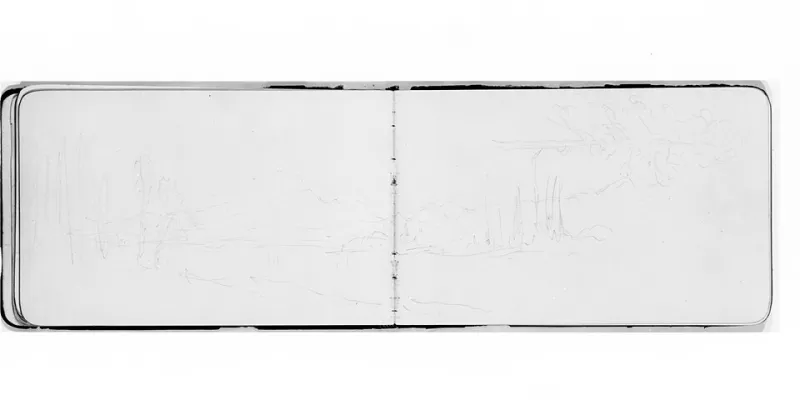
Photo: Albert Bierstadt, CC0, via Wikimedia Commons
There's this ritual that almost every creative person goes through before sharing their portfolio. You open the folder, you scroll through everything you've made, and you start cutting. That experimental piece that didn't quite land? Gone. The project where the client changed direction three times and the final version makes you cringe? Hidden. The early sketch that shows how lost you were at the start? Definitely not making the cut.
By the time you're done, you've got a tight, polished collection of your absolute best moments. And somehow, it feels... flat.
I've been there. And I've talked to enough other creatives — designers, writers, photographers, illustrators — to know this isn't a personal quirk. It's practically a universal experience. We call it curation, but a lot of the time it's actually closer to self-erasure.
Why We Default to Perfect
The instinct to show only your strongest work makes a certain kind of sense. You don't want people to judge you by your stumbles. You want to put your best foot forward, especially when work or money is on the line. That's just human.
But there's also something deeper going on — a fear that if someone sees a piece that didn't work, they'll assume you don't work. That a single rough draft or abandoned experiment will become the thing they remember.
Here's the problem with that logic: when every piece in your portfolio is polished to the same high gloss, there's no texture. No story. No sense of a real person making real decisions under real constraints. It starts to look less like a body of work and more like a highlight reel from someone who has never had a bad day. And nobody trusts that, because nobody lives that.
What Clients Are Actually Looking For
Let's talk about the people on the other side of your portfolio link, because they're not all looking for the same thing.
Some clients — the ones handing you a tightly defined brief with a clear deliverable — might genuinely just want proof you can execute. Show them your cleanest, most relevant work and call it a day.
But a lot of the most interesting creative opportunities come from people who want to collaborate. They're not just hiring a pair of hands; they're looking for a creative mind they can trust. And those people? They want to understand how you think. They want to know what happens when a project goes sideways. They want to see that you can navigate ambiguity and still come out with something worth showing.
Process work — sketches, iterations, even the version you ultimately scrapped — tells that story in a way a final polished piece never can. A case study that walks through your decision-making, including the wrong turns, signals something much more valuable than technical skill. It signals judgment.
The Psychology of the "Imperfect" Piece
There's a concept in social psychology sometimes called the pratfall effect — the idea that a competent person becomes more likable and trustworthy when they show a small flaw or vulnerability. It humanizes them. It makes the rest of their competence feel more credible, not less.
The same dynamic plays out in creative portfolios. When everything looks effortless, viewers subconsciously wonder what you're hiding. But when you include a piece with a visible seam — a project where you acknowledge the challenge, or an experiment that didn't fully succeed — the rest of your work gets a credibility boost. You're not someone who only takes safe shots. You're someone who swings for things.
This doesn't mean dumping every abandoned draft onto your website. It means being intentional about which imperfect work you include and why.
How to Do This Without Undermining Yourself
There's a real difference between strategic vulnerability and just showing bad work. Here's how to walk that line:
Frame it with context. Don't just post an unfinished piece and let people wonder. A short paragraph explaining what you were exploring, what worked, and what you'd do differently turns a rough sketch into a window into your creative mind. Context is everything.
Include at least one process deep-dive. Pick a project — ideally one where something unexpected happened — and document it from start to finish. Show the early ideas, the pivot, the problem you had to solve. This is the kind of content that gets shared and remembered.
Let experiments live somewhere. If you're worried about a speculative piece muddying your main portfolio, create a separate section — call it "Experiments" or "Play" or whatever fits your voice. It signals that you know the difference between finished work and exploration, which is itself a mark of sophistication.
Don't apologize. The way you present imperfect work matters enormously. If you frame something as "this is a mess but here it is anyway," people will take you at your word. If you frame it as "here's what I was trying to figure out," it reads as curiosity and confidence.
The Bigger Picture
Your portfolio isn't just a sales tool — it's an argument about who you are as a creative person. And the most compelling argument you can make isn't "look how perfect I am." It's "look how I think, how I grow, how I handle the hard parts."
The creators who build lasting careers aren't the ones with the most immaculate highlight reels. They're the ones who've figured out how to show their evolution honestly — the stumbles included — in a way that makes you want to follow along for whatever comes next.
So before you hit delete on that experimental piece or bury that process doc in a folder no one will ever open, ask yourself: is this actually bad work, or is it just honest work? Because honest work, presented with intention, might be the most powerful thing in your portfolio.