The Beginner's Advantage: Why the Smartest Creators Keep Deliberately Sucking at New Things

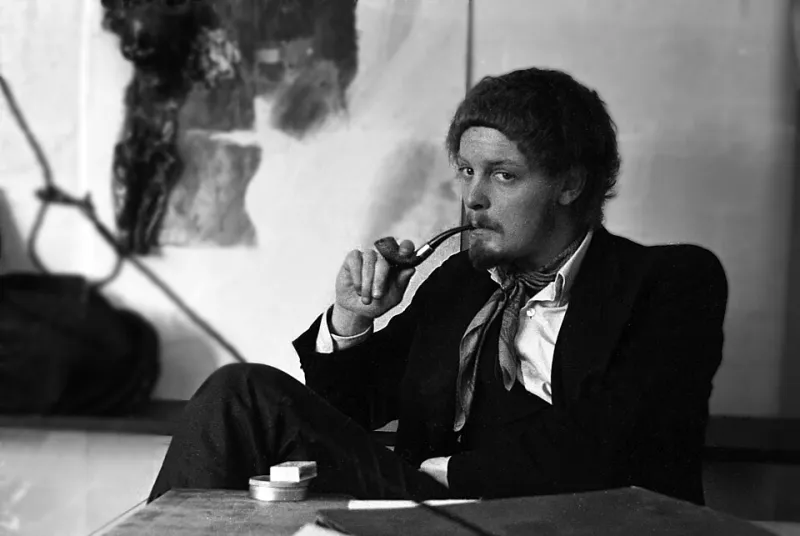
Photo: person learning new creative skill looking focused and curious at workspace, via toppng.com
There's a particular kind of creative stagnation that doesn't look like stagnation from the outside. Your numbers are fine. People still show up for your work. You're technically getting better—more efficient, more polished, more consistent. But something has quietly gone flat. The work doesn't surprise you anymore. You know how it's going to turn out before you start.
This is the ceiling that mastery builds. And the only way through it is to go somewhere you're not a master.
The 'Lean Into Your Strengths' Lie
We've all heard it. Play to your strengths. Double down on what works. Find your niche and own it. There's a whole cottage industry of business advice built on this idea, and honestly, some of it is useful—especially early on, when you're still figuring out what you actually do well.
But for creators who've been at this for a while, the "lean into your strengths" framework starts to work against you. Because your strengths, left unchallenged, become a groove. And grooves become ruts. And ruts are where creative work goes to die quietly.
The most interesting creative careers I've paid attention to over the years—the ones that stayed genuinely compelling decade after decade—weren't built by people who found their lane and stayed in it. They were built by people who kept jumping into lanes they had no business being in and figuring it out anyway.
What Actually Causes Creative Burnout
Burnout gets blamed on overwork, which is sometimes accurate. But there's another version of burnout that's sneakier and way more common among established creators: the burnout that comes from being too competent.
When you know exactly how to do something, the process stops generating the neurological rewards that made it exciting in the first place. The uncertainty is gone. The discovery is gone. You're just executing. And execution, without exploration, is exhausting in a very specific way—it's the exhaustion of going through motions you've memorized.
Beginners don't have this problem. Beginners are wrong constantly, which means they're surprised constantly, which means they're learning constantly. Their brain is lit up in a way that an expert's brain, doing familiar work, simply isn't.
The solution, weirdly, is to manufacture that beginner state on purpose.
Strategic Incompetence as a Creative Tool
I want to be specific about what I mean here, because this isn't about abandoning what you're good at or chasing trends for the sake of relevance.
Strategic incompetence means regularly—intentionally—putting yourself in situations where you don't know what you're doing. A writer starts making short-form video. A photographer learns letterpress printing. A podcaster takes an improv class. A designer learns to code badly. The medium almost doesn't matter. What matters is the experience of not knowing how it works yet.
When you do this, a few things happen:
You remember what it feels like to learn. This sounds obvious until you realize how long it's been since you actually felt that. Real learning—the uncomfortable, uncertain, exciting kind—has a texture to it that's hard to replicate once you're established. Going back to it, even in a completely different domain, reactivates something.
You bring back cross-pollinated ideas. The most interesting creative breakthroughs tend to happen at the edges of disciplines, not in the center of them. When you're learning something new, you're constantly making connections back to what you already know. Some of those connections are genuinely original.
You build tolerance for being bad in public. This one is underrated. A lot of established creators stop taking risks because the stakes feel high—they have an audience, a reputation, a brand to protect. Regularly doing something you're openly bad at keeps that muscle from atrophying. It reminds you that looking incompetent doesn't actually kill you.
The Visibility Question
Here's where it gets interesting: do you share the beginner work, or keep it private?
There's no single right answer, but I'd push back a little on the instinct to hide it. There's something genuinely compelling about watching a skilled person be a clumsy beginner. It's relatable in a way that polished work rarely is. It also signals to your audience that you're still curious, still growing, still a real person and not just a content machine.
That said, context matters. If your brand is built on expertise in a specific area, randomly posting mediocre watercolors might confuse people. The key is framing. Share the process, not just the output. Let people in on why you're doing it. "I'm learning X because I want to understand Y" is a story. A string of bad attempts without context is just noise.
Making It a Practice, Not a Phase
The trap here is treating the beginner dive as a one-time reset—something you do when you're burned out, then go back to your regular programming. That works, but it's less powerful than building it into your creative rhythm on purpose.
Some creators I find genuinely inspiring have made this a near-annual practice. Every year or two, they pick something they're actively bad at and spend real time with it. Not to pivot their career. Not to go viral. Just to feel the discomfort of not knowing, and to see what it shakes loose.
The results aren't always obvious or immediate. But over time, the work of someone who keeps doing this looks different from the work of someone who stopped being a beginner at 35. It has more range. More surprise. More life.
Your Best Work Hasn't Been Made Yet
I believe this genuinely: your most interesting creative output probably isn't behind you. But it's also not going to come from doing more of what you already do well.
It's going to come from somewhere you haven't been yet—some unfamiliar medium, some uncomfortable skill, some domain where you're starting from zero. The willingness to go there, to look uncertain and unpolished and still show up anyway, is what separates creators who stay vital from those who quietly calcify.
Go be bad at something. On purpose. Soon.