The Input Paradox: Why Cutting Off What You Consume Is the Fastest Way to Grow What You Create

There's a version of this story that gets told a lot in creative circles: the more you study, the more you grow. Watch the masters. Absorb everything. Fill yourself up with great work until greatness starts leaking out of you.
And honestly? That's not wrong — up to a point.
But somewhere along the way, for a lot of us, that advice quietly flips. The watching becomes a ceiling. The absorbing becomes a replacement for doing. And the skills you were so sure were building start to plateau in ways that feel confusing, because you're doing everything right. You're consuming. You're learning. You're inspired daily.
So why does your own work feel like it's standing still?
What Your Brain Is Actually Doing When You Consume Constantly
Here's the uncomfortable neuroscience of it. When you're regularly exposed to high-quality work — whether that's scrolling through a photographer's portfolio, binging a showrunner's entire body of work, or deep-diving into another writer's essays — your brain builds a really detailed internal model of what "good" looks like.
That model is useful. But it's also a trap.
Because your brain starts using that model as the immediate benchmark for your own output. Every time you sit down to make something, your prefrontal cortex is quietly running a comparison process — your rough, in-progress, half-formed thing against the polished final products you've been marinating in. The result is a kind of learned helplessness dressed up as discernment. You start editing before you even start creating. You second-guess instincts before they've had a chance to fully form.
Researchers call this "creative interference" — the way external aesthetic inputs can actually suppress your own generative thinking rather than fuel it. It's not that inspiration is bad. It's that too much of it, too frequently, can crowd out the internal voice that's trying to develop something new.
The False Ceiling You Don't Know You're Building
Here's what makes this so sneaky: the ceiling doesn't feel like a ceiling. It feels like taste.
You look at your work and you know it's not where you want it to be. You look at the work you admire and you can articulate exactly why it's better. That gap? That's not a sign of failure. That's actually a healthy sign of developing aesthetic judgment.
But if you're constantly feeding that gap with more input instead of more output, you're making the ceiling lower, not higher. Every new piece of work you consume that's better than yours adds another data point to the comparison model your brain is running. And eventually, you stop reaching for your own ceiling — you start reaching for theirs.
The weird thing is, the creators whose work you're consuming? Most of them went through deliberate periods of isolation. Not hermit-style, necessarily, but intentional input fasts. Times when they stopped looking outward so the stuff inside them had room to surface.
The Case for Creative Isolation (Without Going Off the Grid)
You don't have to move to a cabin in Vermont and unplug your router. But you probably do need to get more intentional about when you consume versus when you create.
Think of it like this: input and output use overlapping neural resources. When you're in heavy consumption mode, your brain is organizing, categorizing, and storing. When you're in creation mode, it needs to retrieve, recombine, and generate. Those two processes aren't enemies, but they're not friends either. They need separate time to do their best work.
A few things that actually help:
Start your creative sessions before you look at anything. Before you open Instagram, before you check your email, before you pull up any reference material — make something first. Even 20 minutes. Your brain hasn't been primed by someone else's aesthetic yet, and what comes out in that window is often your most distinctly yours.
Audit your inputs by genre. If you're a graphic designer and you spend two hours a day on Behance, that's a very specific kind of comparison pressure. Try spending some of that consumption time in adjacent fields — architecture, fashion, industrial design. You're still feeding your visual brain, but you're not loading it with direct competitors to your own style.
Schedule input windows, not input streams. The problem with most of how we consume isn't the consuming itself — it's that it's ambient and constant. There's no off switch. Try batching your inspiration-gathering into specific windows (Tuesday and Thursday afternoons, say) and treating the rest of your creative time as an input-free zone.
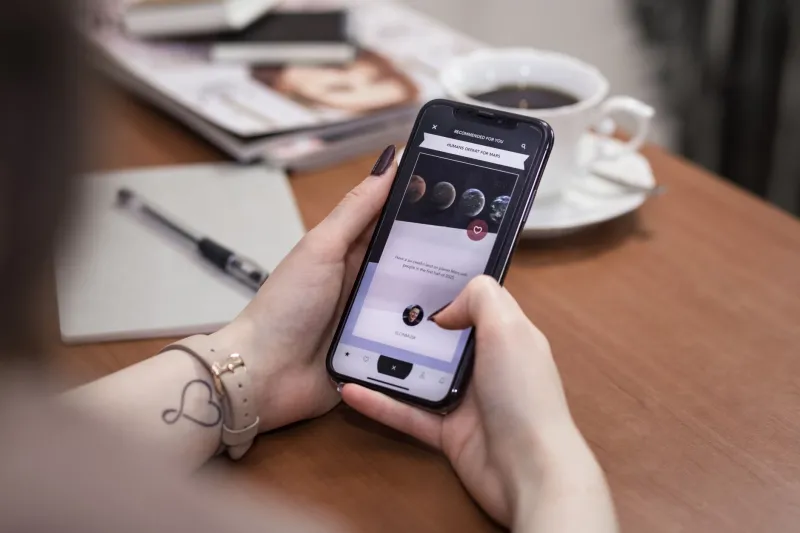
Notice when you're consuming to avoid creating. This one's uncomfortable but important. Sometimes we scroll through other people's work because we're genuinely looking for something. And sometimes we scroll because we're scared to open the blank document. Learning to tell the difference is a real skill.
What Actually Happens When You Pull Back
The first few days of limiting input usually feel like withdrawal. Things feel quieter. You're not sure what to make. There's a low-grade creative anxiety that's honestly kind of uncomfortable.
And then something shifts.
The ideas that come up aren't borrowed from the last thing you saw. They're coming from somewhere older and weirder — from your actual experience, your specific obsessions, the particular way your brain connects things. That's not a romanticized description of inspiration. It's just what happens when you stop filling every available mental space with someone else's output.
Your skill doesn't disappear when you stop watching other people use theirs. It actually has more room to develop. The muscle memory you've been building through practice gets to work without being constantly second-guessed by your comparison reflex.
A lot of creators who've made this shift describe the same thing: their work started feeling more like theirs. Not better in a technical sense, necessarily — but more distinctly theirs. More recognizable. More confident in its own point of view.
And that, honestly, is what makes work interesting to an audience. Not how technically polished it is. How much it sounds like a specific person made it.
The Real Question
The question isn't whether you should study great work or stay inspired. Of course you should. The question is whether your consumption habit is serving your creative development or quietly running it into the ground.
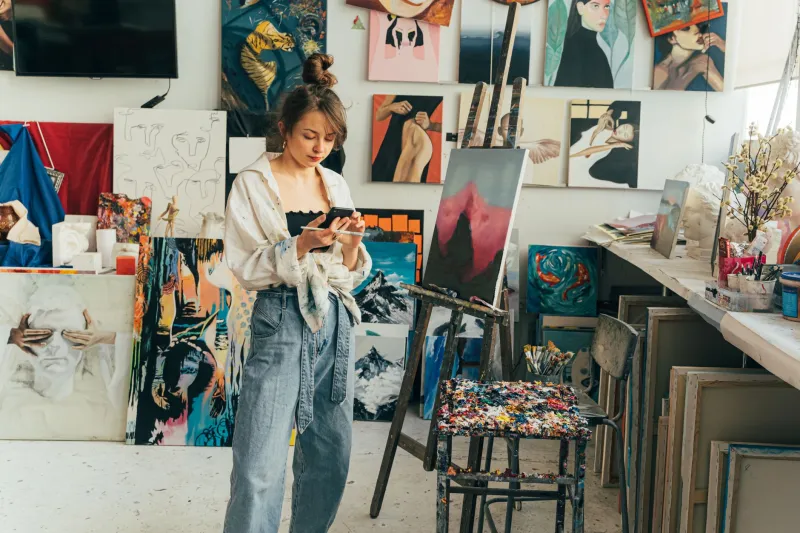
Pay attention to how you feel after a deep dive into someone else's portfolio versus after a solid stretch of your own making. If the first one consistently leaves you feeling behind and the second one leaves you feeling like yourself — that's your answer right there.
The input isn't the problem. The ratio is.