Why Studying the Greats in Your Field Might Be Slowly Erasing You
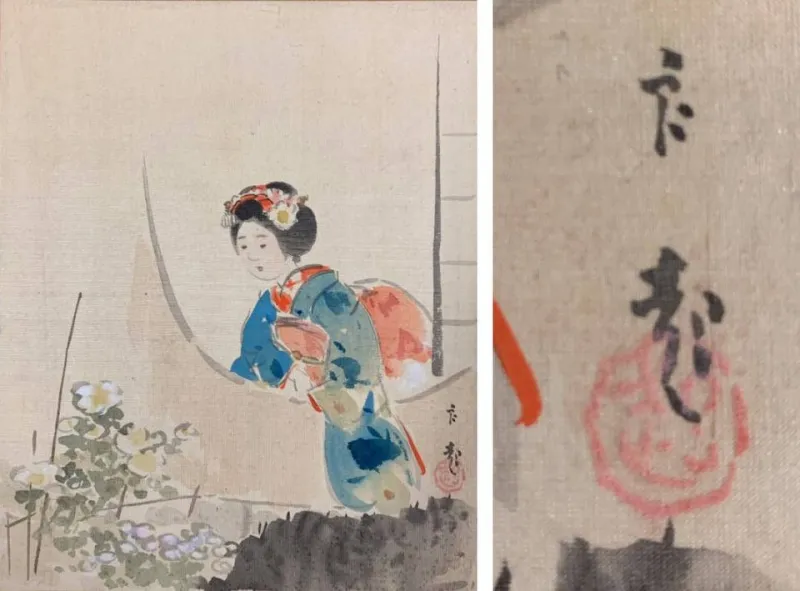
Photo: unidentified Japanese artist, Public domain, via Wikimedia Commons
The Slow Fade Nobody Warns You About
There's a specific kind of creative crisis that doesn't announce itself with a bang. It creeps in quietly, over months — sometimes years — until one day you look at your work and realize it feels weirdly familiar. Not familiar like you, familiar like someone else wearing your name tag.
This is what I'd call the slow fade. And it almost always starts with something genuinely good: paying attention to the people doing the work you want to be doing.
You follow the big names in your space. You study their structure, their aesthetic, the way they caption photos or open essays or frame their videos. You're learning, which is smart. But somewhere along the way, learning tips over into absorbing — and absorbing tips over into mirroring — and suddenly your work looks and sounds like a slightly blurrier version of someone who already exists.
The tricky part? It happens to almost every creator. And most of them don't catch it until they're pretty far down the road.
Why Your Brain Is Wired to Copy (Even When You're Trying Not To)
Here's the uncomfortable psychological reality: mimicry isn't a character flaw. It's a feature of how humans learn. We're pattern-recognition machines, and when we're in unfamiliar territory — like building a creative career — our brains lean hard on the examples we've been given.
Psychologists call this observational learning, but in creative spaces it shows up as something more specific. You don't just learn techniques from the people you admire. You absorb their framing, their worldview, their aesthetic instincts. You start to internalize what "good" looks like through their eyes. And then, almost inevitably, you start producing work that reflects that version of good.
The more you consume someone's work — especially if you're consuming it while you're actively creating — the more their voice gets layered into yours. It's not plagiarism. It's not even conscious. It's just what happens when you're marinating in someone else's creative output while your own style is still forming.
The issue isn't that you studied them. The issue is what happens if you never stop.
What Derivative Work Actually Looks Like in Practice
Let me be specific, because "derivative work" can sound abstract until you see it clearly.
Derivative work is the food blogger who adopted every visual and tonal choice from a bigger creator in their niche — the flat lays, the self-deprecating captions, the exact ratio of personal story to recipe — and now their feed is virtually indistinguishable from a dozen others following the same template.
It's the essayist who started reading a lot of one particular cultural critic, and now every piece they write has that same detached, slightly ironic register, even when it doesn't fit what they're actually trying to say.
It's the podcaster who modeled their show so closely on a successful format that even their vocal cadence and interview rhythm sounds borrowed.
None of these creators are doing anything dishonest. They're doing what makes sense when you're learning. But the result is work that blends into the noise instead of cutting through it — because the audience for the original already has the original. They don't need a copy.
The Difference Between Influence and Imitation
This is where things get nuanced, because the answer isn't "stop learning from people you admire." Influence is real, and it's valuable. Every creator is, in some sense, in conversation with the work that came before them.
The difference between influence and imitation comes down to what you're actually doing with what you've taken in.
Influence is when you absorb a technique, a structure, an idea — and then run it through your own particular experience, perspective, and aesthetic sensibility until it comes out the other side looking like something only you could have made. Think of how Kendrick Lamar absorbed the West Coast rap tradition and transformed it into something undeniably his own. Or how Phoebe Bridgers clearly carries the fingerprints of folk and indie rock predecessors but sounds like no one else alive.
Imitation is when you skip the transformation step. You take the output of someone else's creative process and reproduce it without running it through your own filter first.
The test is simple, even if passing it isn't: could someone else have made this exact thing? If the answer is yes — especially if the "someone else" is a specific person you follow — you've got some work to do.
Practical Ways to Find Where You Actually Start
So how do you actually break free from this? A few things that genuinely help:
Do a source audit. List the five creators you consume most heavily in your field. Then look at your last ten pieces of work — your recent posts, essays, videos, whatever you make. How much of the aesthetic, structural, and tonal choices in that work can you trace back to those five people? You might be surprised.
Create something without looking first. Before you start a new project, resist the urge to scroll through your feed or pull up your favorite accounts for "inspiration." Make something from scratch — from your own memory, your own experience, your own gut instinct — before you go anywhere near external input. What comes out? That's closer to your actual voice.
Go sideways, not just up. Instead of only studying the leaders in your specific genre, start consuming work from completely different fields. A novelist reading architecture criticism. A graphic designer listening to stand-up comedy. A filmmaker studying the structure of long-form journalism. Cross-pollination is one of the most reliable ways to develop a genuinely distinctive perspective, because you're pulling from sources your direct competitors probably aren't.
Ask yourself the uncomfortable question. When you make a choice — a color palette, an opening line, a structural decision — ask yourself honestly: am I doing this because it feels right to me, or because I've seen someone I admire do it? There's no shame in the answer being the latter. But you need to know.
Create some distance. If you've been heavily following someone whose influence feels too strong, take a deliberate break. A month of not consuming their work can do more for your creative clarity than almost anything else.
Your Weird Stuff Is the Good Stuff
Here's what I've noticed, both in my own creative work and in watching other creators build something real over time: the things that make your work distinctly yours are almost never the polished, professional choices. They're the weird ones. The specific references only someone with your exact life experience would make. The structural quirks that your more "proper" influences would probably smooth out. The aesthetic instincts that don't fit neatly into what your genre currently rewards.
Those are the things worth protecting. Those are the things that make an audience feel like they've found their person — not just another version of someone they already follow.
The goal was never to become a better imitation of someone else. It was always to become a clearer, more confident version of you. And sometimes the most important creative work you can do isn't making something new — it's figuring out which parts of your current work are actually yours, and which parts you borrowed and forgot to give back.