When Your Greatest Strength Becomes Your Smallest Box
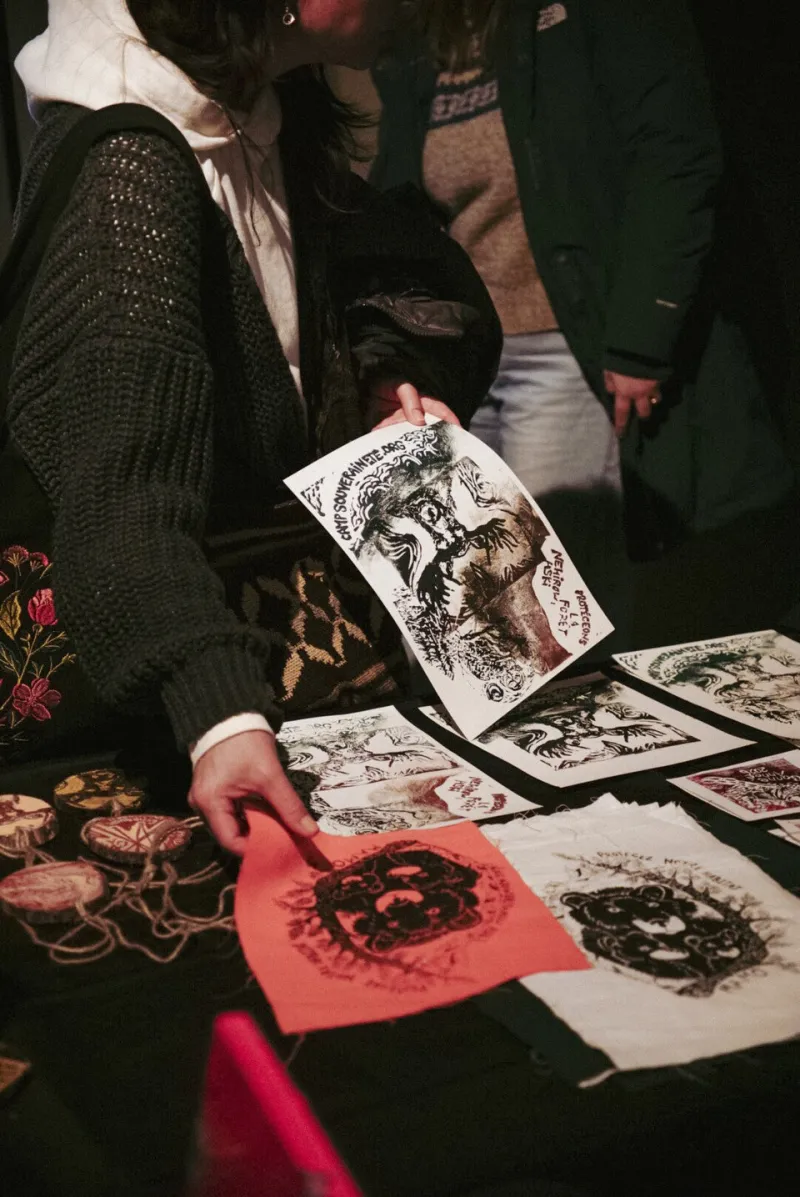
Photo: Esmé James @ezy_bezzie, CC BY-SA 4.0, via Wikimedia Commons
There's a specific kind of stuck that doesn't look like stuck. It looks like a full client roster, a recognizable aesthetic, a reputation people respect. From the outside, you've arrived. From the inside, you're quietly suffocating.
This is what I've started calling the competence trap — and honestly, it might be the sneakiest creative rut there is. Because unlike burnout, which announces itself pretty loudly, this one wraps itself in the language of success. You're not failing. You're thriving. And somehow that's exactly the problem.
How Mastery Becomes an Identity (and Then a Cage)
Here's how it usually goes. You spend years — sometimes a decade or more — getting genuinely excellent at a thing. Illustration. Long-form writing. Portrait photography. Motion graphics. Whatever it is, you put in the reps. You developed taste, technique, instincts. People started coming to you specifically because of that thing.
And then, almost without noticing, the skill stopped being something you do and became something you are.
That shift sounds subtle, but the downstream effects are massive. When your craft becomes your identity, experimenting with something new doesn't just feel uncomfortable — it feels like a threat. Picking up a camera when you're a writer, or trying ceramics when you're a graphic designer, suddenly carries this weird emotional weight. You're not just a beginner at a new thing. You feel like you're betraying the thing that made you you.
So you don't. You stay in your lane. You keep refining what already works. And over time, the lane gets narrower.
The Unlearning Problem
A few years back, a well-known illustrator I follow — someone whose editorial work had been featured in publications most creatives would give a kidney to appear in — completely dropped off the radar. When she came back, she was posting lo-fi, kind of chaotic paintings on cheap paper. Stuff that looked, frankly, like she was just starting out.
The comments were confused. A few were unkind. But she talked openly about what had happened: she'd gotten so technically precise, so locked into her signature style, that every new piece felt like a performance review. The joy was gone. She couldn't make anything without immediately evaluating it against her own established standard.
So she deliberately started making bad work. Intentionally bad. Work that had zero chance of living up to her reputation because it wasn't trying to.
What she was doing — even if she didn't frame it this way — was unlearning. Not forgetting her skills, but loosening their grip on her creative identity. Giving herself permission to be a mess again.
This is harder than it sounds when you're good at something. Real, earned competence comes with an internal critic that's been calibrated to a very high standard. That critic is useful when you're executing at a professional level. It's corrosive when you're trying to explore.
The Platform Problem Makes This Worse
Social media has made the competence trap significantly harder to escape. Algorithms reward consistency. Audiences follow you because of a specific thing you do. When you pivot or experiment publicly, engagement often drops — and for a lot of creatives, that drop feels like confirmation that they should've stayed put.
But here's the thing: the audience you've built around one version of yourself isn't necessarily the audience that's going to grow with you. Sometimes the most important creative move you can make is building a small, separate corner where you get to be uncertain again. A private Instagram. A newsletter that ten people read. A Substack you haven't told anyone about yet.
Not everything needs an audience while it's figuring itself out.
A Practical Framework for Staying Curious Without Burning It Down
I'm not suggesting you blow up your career or stop doing the work that pays your bills. The goal isn't to abandon your expertise — it's to stop letting it be the only thing you are. Here's what actually helps:
Create a dedicated "bad work" practice. Set aside time — even thirty minutes a week — to make something in a medium or format where you have no reputation to protect. The only rule is that it doesn't have to be good. This isn't about producing content. It's about remembering what curiosity feels like without stakes attached.
Borrow from adjacent fields. Some of the most interesting creative evolutions happen when people drag influences across disciplines. A copywriter who starts studying stand-up comedy. A photographer who gets obsessed with architecture. You don't have to switch careers — you just have to let outside inputs mess with your process a little.
Separate your identity from your output. This one's more internal work than tactical, but it matters. Start noticing when you say "I am a [blank]" versus "I do [blank]." The first framing makes experimentation feel like identity loss. The second leaves room.
Revisit old work without judgment. Not to cringe at it or celebrate it — just to notice what you were reaching for back when you didn't know how to do it yet. Early work is full of interesting instincts that got sanded down by skill. Some of those instincts are worth recovering.
Give yourself a protected experiment window. Tell yourself — and maybe one trusted person — that for the next ninety days, you're going to try something new and you're not going to evaluate it until the window closes. No mid-process judgment allowed. This is harder than it sounds, but it interrupts the habit of measuring new work against established standards before it's had a chance to become anything.
The Real Cost of Staying Comfortable
Mastery is genuinely valuable. I'm not here to tell you that getting good at things is a trap in itself — it's not. The trap is only being the thing you're good at. The trap is letting competence close off the parts of you that are still figuring things out.
The creatives who seem to sustain real longevity — the ones who are still doing interesting work fifteen or twenty years in — almost all have one thing in common. They never fully stopped being beginners at something. They kept one foot in the uncomfortable, clumsy, uncertain territory of not-knowing.
Your expertise is worth protecting. But so is your curiosity. And if you have to choose between them, the curiosity is probably the thing that's harder to rebuild once it's gone.